Best Vitamin C in Pakistan: Tablets & Natural Sources
Vitamin C for immunity and skin: how much you actually need, which forms are worth buying in Pakistan, and the local foods that beat any tablet. A practical guide that separates the hype from the evidence.
A named review is not recorded for this article. Confirm medical advice with a qualified clinician.
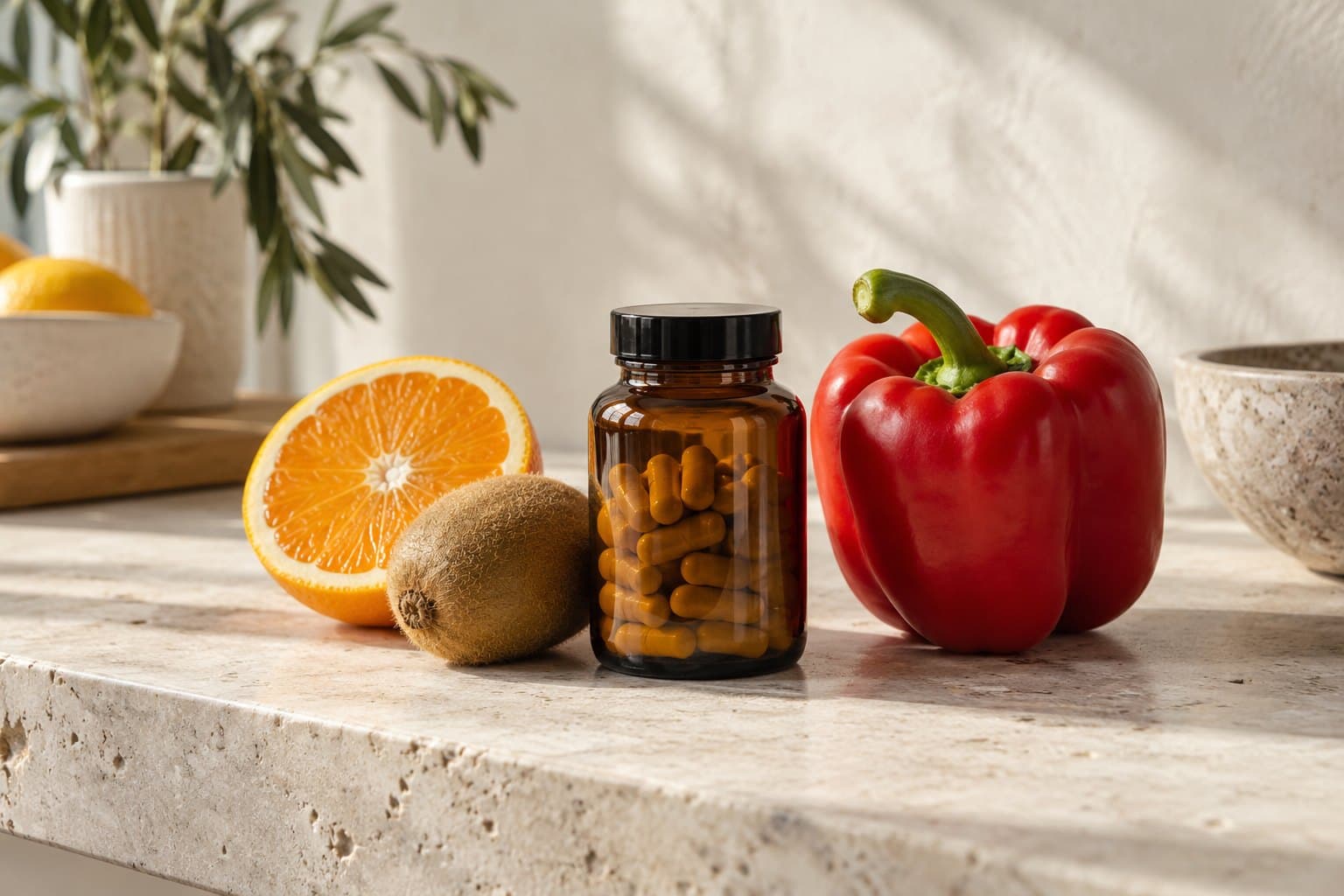
Table of Contents
- How Much You Actually Need
- Best Forms if You Supplement
- For Skin and Immunity
- Natural Sources That Beat a Tablet
- Vitamin C and Colds: What the Evidence Actually Shows
- Related Medicines & Tools
- Frequently Asked Questions
- What is the best vitamin C in Pakistan?
- How much vitamin C do I need per day?
- Does vitamin C prevent colds?
- Is vitamin C good for skin?
- Can I take too much vitamin C?
- Does vitamin C actually prevent colds?
- Can vitamin C help with iron absorption?
Quick Answer
Most people in Pakistan can get all the vitamin C they need from food: citrus, amla, guava, lemon and green vegetables are rich sources. A supplement helps if your diet is poor or during recovery, but megadoses do not prevent colds and the excess is simply passed in urine. A modest daily amount, from an effervescent or plain tablet, is enough. Vitamin C aids iron absorption and supports skin and immunity.
Vitamin C is one of the most marketed supplements in Pakistan, sold for immunity, skin glow and energy. Some of that reputation is earned and some is oversold. This guide separates what vitamin C genuinely does from the hype, and points to the local foods that often make a tablet unnecessary.
How Much You Actually Need
The body needs only a modest amount of vitamin C each day, and most people meet it easily through food. It is water-soluble, so the body does not store large amounts; whatever you do not use is passed out in urine. This is the key reason megadoses are wasteful: beyond a point, you are quite literally flushing money away.
A balanced diet with some fruit and vegetables usually covers your needs without any supplement at all.
Best Forms if You Supplement
If your diet is limited, you are recovering from illness, or you simply prefer a supplement, a modest daily vitamin C tablet is fine. Effervescent tablets dissolved in water are popular and easy to take, while plain tablets are cheaper. Both deliver the same vitamin C. There is no need for very high-dose products; a sensible daily amount is enough, and taking it with food is gentle on the stomach.
For Skin and Immunity
Vitamin C supports the immune system and is needed to make collagen, which matters for skin and wound healing. It will not prevent colds in well-nourished people, despite the popular belief, though it may slightly shorten them in some cases. For skin, adequate vitamin C supports collagen, but a tablet is not a substitute for sun protection, sleep and a good diet.
One genuinely useful role is helping the body absorb iron, which is why pairing vitamin C with iron-rich food or an iron tablet is worthwhile.
Natural Sources That Beat a Tablet
Pakistan has excellent natural vitamin C. Amla (Indian gooseberry) is exceptionally rich, and guava, citrus fruits like orange and malta, lemon, and green vegetables all provide plenty. Eating these gives you vitamin C alongside fibre and other nutrients that a tablet lacks. For most people, a couple of servings of such foods a day are all the vitamin C they need.
Vitamin C: Sense vs Hype
What it does, and where to get it
Food First
Amla, guava, citrus and greens are rich sources.
Boosts Iron Uptake
Pair with iron-rich food to absorb more iron.
Skin & Collagen
Needed for collagen, but not a substitute for sun care.
Megadoses Wasted
Excess is passed in urine; more is not better.
Vitamin C Will Not Cure a Cold
Despite the popular belief, taking large doses of vitamin C does not prevent colds in well-nourished people and only modestly affects them at best. Do not rely on it in place of rest, fluids and medical care when needed, and avoid very high doses, which can upset the stomach.
Vitamin C and Colds: What the Evidence Actually Shows
Vitamin C's biggest selling point, preventing colds, is largely a myth for most people. Reviews of the research find that regular vitamin C does not prevent colds in the general population; it only modestly shortens their duration, and even that benefit is small. High doses taken once a cold has already started do not reliably help. So buying megadose vitamin C to avoid winter colds is mostly wasted money.
Where vitamin C genuinely earns its place is elsewhere. It is needed to make collagen, which supports skin, gums and wound healing, and a real deficiency (scurvy) causes serious problems, though that is rare with any reasonable diet. Its most practical everyday role is boosting the absorption of iron from food, which is useful for anyone prone to anaemia. For all these needs, the modest amounts in fruit and vegetables, or a small daily tablet if your diet is limited, are enough; the body simply passes out any excess.
Related Medicines & Tools
See the medicine pages below for detail.
Medicine Reference
Becosules Capsule
B-complex with vitamin C, useful during recovery or poor diet.
View encyclopedia entryMedicine Reference
Surbex-T Tablet
B-complex with vitamin C for energy support.
View encyclopedia entryMedicine Reference
Centrum Tablet
Balanced multivitamin that includes vitamin C.
View encyclopedia entryFrequently Asked Questions
What is the best vitamin C in Pakistan?
For most people, the best source of vitamin C is food, not a supplement: amla, guava, citrus, lemon and green vegetables are rich and cheap. If you do supplement, a modest daily effervescent or plain tablet is fine, and there is no need for very high-dose products. Match the choice to your diet, and remember excess vitamin C is simply passed in urine.
How much vitamin C do I need per day?
The body needs only a modest daily amount, which most people meet easily through fruit and vegetables. Because vitamin C is water-soluble and not stored in large amounts, taking far more than you need does not help; the excess is excreted. A couple of servings of vitamin-C-rich foods a day usually covers your needs without any supplement.
Does vitamin C prevent colds?
Not in well-nourished people. Despite the popular belief, regular vitamin C does not prevent colds for most people, though it may slightly shorten them in some cases. It is not a substitute for rest, fluids and, when needed, medical care. Very high doses do not add benefit and can upset the stomach, so a modest amount is the sensible approach.
Is vitamin C good for skin?
Vitamin C is needed to make collagen, which supports skin and wound healing, so adequate intake matters for skin health. But a supplement is not a shortcut to glowing skin and cannot replace sun protection, good sleep and a balanced diet. Topical vitamin C serums are a separate product with their own evidence. For most people, dietary vitamin C is enough for skin needs.
Can I take too much vitamin C?
Yes. While vitamin C is generally safe, very high doses can cause stomach upset, diarrhoea and, in some people, an increased risk of kidney stones. Because the body cannot store the excess, megadoses offer no added benefit and are simply passed in urine. A modest daily amount from food or a sensible tablet is all you need.
Does vitamin C actually prevent colds?
Not for most people. Reviews of the evidence show that regular vitamin C does not prevent colds in the general population and only slightly shortens how long they last. Taking large doses once a cold has started does not reliably help either. So megadose vitamin C is not the cold-prevention shortcut it is marketed as. A varied diet usually provides all the vitamin C you need for its genuine roles.
Can vitamin C help with iron absorption?
Yes, this is one of vitamin C's most useful practical roles. Taking vitamin C with iron-rich food, or with an iron tablet, significantly improves how much iron the body absorbs, which is helpful for anyone prone to iron-deficiency anaemia. A squeeze of lemon on daal, or an orange or guava with a meal, is an easy way to do this. It works best when tea and coffee are kept away from the meal.
Medical Sources
Tags
Share
Medical disclaimer
Ye article sirf educational maqsad ke liye hai. Personal diagnosis, dosing, aur treatment decision ke liye doctor se mashwara karein.
Related posts
Omeprazole vs Esomeprazole in Pakistan: Risek, Nexum & Esso Compared
9 min read
Panadol Price in Pakistan 2026. Every Variant Compared
5 min read

Stomach Pain Medicine in Pakistan: Picking the Right Tablet for Cramps, Acidity, or Gas
9 min read
Panadol Extra Uses, Caffeine Content & Side Effects Explained (Pakistan)
6 min read