Best Fruits for Diabetics in Pakistan: Safe & to Limit
Can diabetics eat fruit, and what about mango? A Pakistani guide to the safest lower-GI fruits, which to limit, how portion and timing keep blood sugar steady, and the honest answer to the summer mango question.
A named review is not recorded for this article. Confirm medical advice with a qualified clinician.
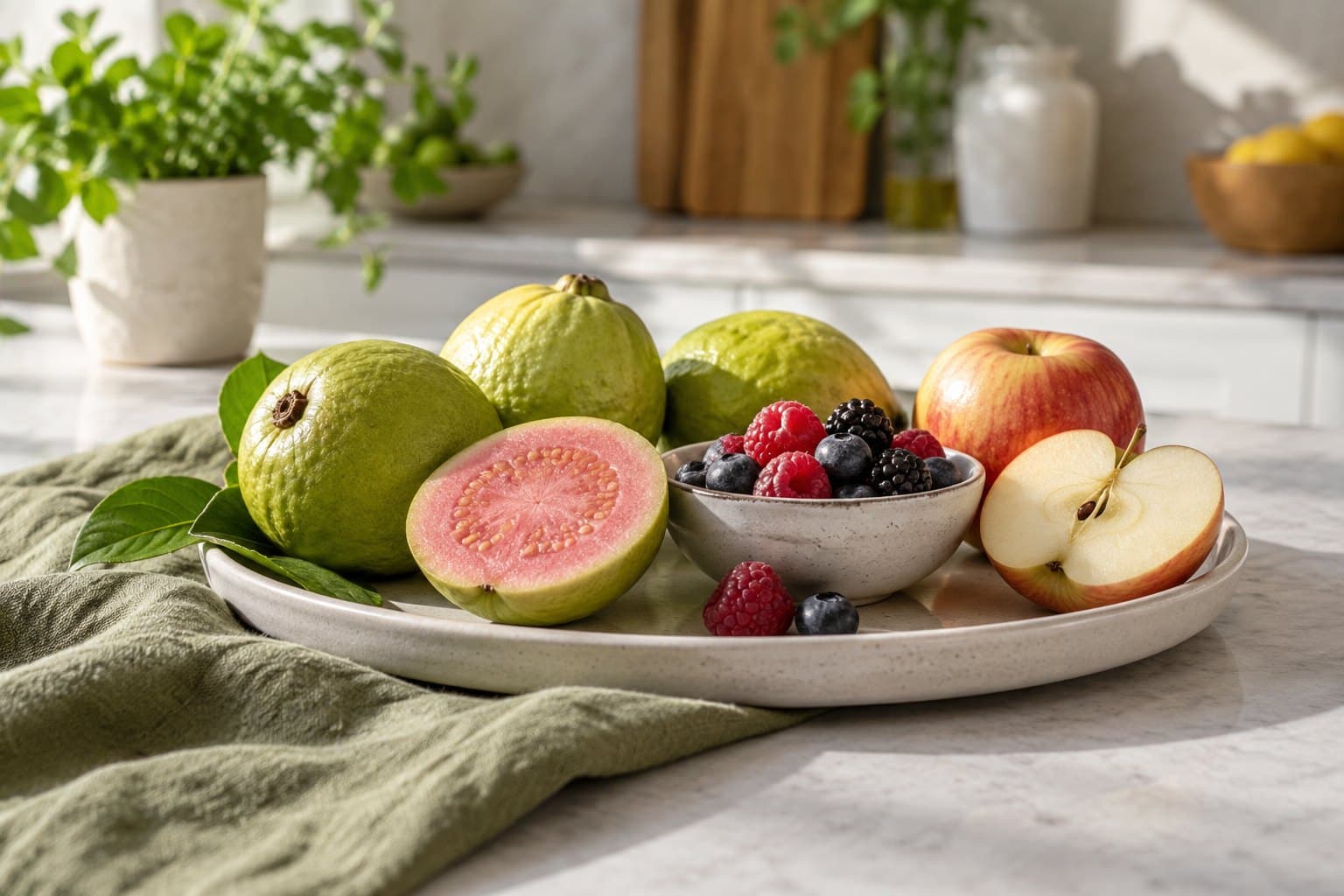
Table of Contents
- Fruit and Blood Sugar: The Basics
- Safer Lower-GI Fruits
- Fruits to Limit
- The Mango Question
- Portion and Timing Tips
- Related Medicines & Tools
- Frequently Asked Questions
- Can diabetics eat fruit?
- Can a diabetic eat mango?
- Which fruits are best for diabetics in Pakistan?
- Which fruits should diabetics avoid or limit?
- Is fruit juice okay for diabetics?
Quick Answer
Diabetics can eat fruit; the key is which fruit, how much, and when. Lower-GI choices like guava, apple, pear, jamun, papaya and citrus are safest in sensible portions. Higher-sugar fruits like mango, banana, grapes, chikoo and dates should be limited to small amounts and eaten with a meal or nuts, not alone. Whole fruit beats juice every time. Portion control matters more than avoiding fruit entirely.
One of the most common questions Pakistani diabetics ask is whether they can eat fruit at all, and especially whether they can touch mango in summer. The good news is that fruit is not off-limits. With the right choices and portions, it fits into a diabetic diet and brings fibre, vitamins and satisfaction. The trick is knowing which fruits to favour and which to keep small.
Fruit and Blood Sugar: The Basics
Fruit contains natural sugar, but it also has fibre, water and nutrients, and whole fruit raises blood sugar more slowly than juice or sweets. The measure that matters is the glycaemic index (GI) and, just as much, the portion. A small serving of a lower-GI fruit has a modest effect; a large bowl of a high-GI fruit does not.
This is why the answer is rarely never, and almost always how much and how often.
Safer Lower-GI Fruits
Some fruits widely available in Pakistan are gentler on blood sugar and are the ones to lean on. Guava (amrood) is high in fibre and a good choice. Apple, pear, jamun (black plum, often used in diabetes), papaya, peach and citrus fruits like orange and malta are also relatively kind in sensible portions. Berries, where available, are excellent.
Eating these with the skin on, where edible, adds fibre that slows sugar absorption further.
Fruits to Limit
Higher-sugar fruits need portion care rather than a total ban. Mango (aam), banana, grapes, chikoo (sapodilla), and dried fruits like dates and raisins raise blood sugar more, so they are best kept to small amounts. This does not mean never; it means a small piece rather than a full plate, and ideally paired with something that slows absorption.
The Mango Question
Every Pakistani summer brings the same question: can a diabetic eat mango? The honest answer is yes, in strict moderation. Mango is high in natural sugar, so a small portion, say a few pieces rather than a whole fruit, eaten as part of a meal rather than on top of it, and balanced against the rest of the day's carbohydrates, is reasonable for many. Check your blood sugar response, and if it spikes badly, cut back. Blanket denial usually leads to bingeing; sensible portions are more sustainable.
Portion and Timing Tips
How you eat fruit matters as much as which fruit. Keep to one small serving at a time, eat whole fruit rather than juice, and pair fruit with a protein or fat like a handful of nuts or a spoon of yoghurt to blunt the sugar rise. Spreading fruit through the day rather than eating a large amount at once keeps blood sugar steadier.
Fruit for Diabetics: Smart Choices
Which to favour, which to limit
Favour
Guava, apple, pear, jamun, papaya, citrus in portions.
Limit
Mango, banana, grapes, chikoo, dates: small amounts.
Whole, Not Juice
Juice spikes sugar; whole fruit has fibre.
Pair It
Eat fruit with nuts or yoghurt to slow the rise.
Diabetes Care Is More Than Fruit Choice
Fruit choices are one small part of managing diabetes. Medication, overall diet, activity and regular monitoring matter more. Do not change your diet drastically or stop any medicine without your doctor's advice, and use your own blood-sugar readings to guide what works for you.
Related Medicines & Tools
See the pages below for related content.
For a full eating plan, see our diabetes diet plan for Pakistan, and to recognise the condition early, our guide to diabetes symptoms.
Frequently Asked Questions
Can diabetics eat fruit?
Yes. Fruit is not off-limits for diabetics; the key is which fruit, how much, and when. Lower-GI fruits like guava, apple, pear, jamun and citrus are safest in sensible portions, while higher-sugar fruits should be limited. Whole fruit is better than juice because its fibre slows the sugar rise. Portion control matters far more than avoiding fruit entirely.
Can a diabetic eat mango?
Yes, in strict moderation. Mango is high in natural sugar, so a small portion, a few pieces rather than a whole fruit, eaten as part of a meal and balanced against the rest of the day's carbohydrates, is reasonable for many diabetics. Check your blood sugar response and cut back if it spikes. Complete denial often backfires; sensible portions are more sustainable.
Which fruits are best for diabetics in Pakistan?
Guava (amrood) is an excellent high-fibre choice, and apple, pear, jamun, papaya, peach and citrus fruits are relatively gentle on blood sugar in sensible portions. Berries are also very good where available. Eating fruit whole, with the skin where edible, adds fibre that slows sugar absorption. These are the fruits to favour over higher-sugar options like mango and grapes.
Which fruits should diabetics avoid or limit?
Rather than avoiding them completely, diabetics should limit higher-sugar fruits: mango, banana, grapes, chikoo, and dried fruits like dates and raisins. These raise blood sugar more, so keep to small amounts and pair them with protein or fat to slow the rise. The goal is portion control, not a total ban, since even these can fit occasionally in a balanced diet.
Is fruit juice okay for diabetics?
Whole fruit is much better than juice for diabetics. Juicing removes most of the fibre and concentrates the sugar, so juice raises blood sugar quickly, much like a sugary drink. If you want the fruit, eat it whole. If you do have juice, keep the portion very small and pair it with food. In general, whole fruit in sensible portions is the safer choice.
Medical Sources
Tags
Share
Medical disclaimer
Ye article sirf educational maqsad ke liye hai. Personal diagnosis, dosing, aur treatment decision ke liye doctor se mashwara karein.