How Much Protein Per Day Do You Really Need?
Protein is everywhere in fitness talk, but how much do you actually need? A Pakistani guide to daily protein by goal, the best desi sources, whether you need powders, and how to spread protein through the day.
A named review is not recorded for this article. Confirm medical advice with a qualified clinician.
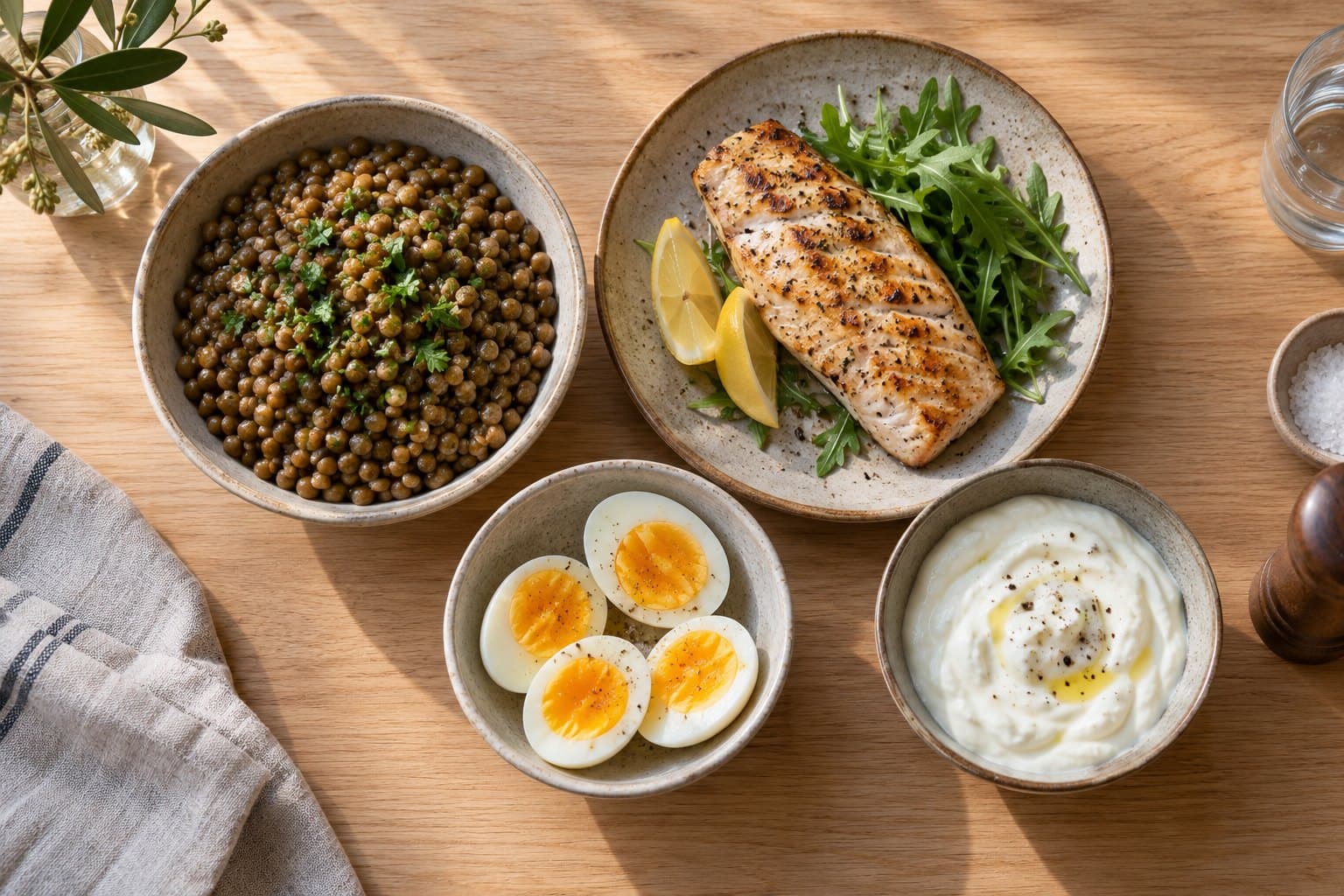
Table of Contents
- How Much You Need by Goal
- The Best Pakistani Protein Sources
- Do You Need Protein Powder?
- Spread It Through the Day
- Related Medicines & Tools
- Frequently Asked Questions
- How much protein do I need per day?
- What are the best protein sources in Pakistan?
- Do I need protein powder to build muscle?
- Can I eat too much protein?
- Should I eat all my protein at once or spread it out?
Quick Answer
Most adults need roughly 0.8 grams of protein per kilogram of body weight per day for basic health, so around 50 to 60 grams for an average adult. People who exercise, build muscle, are older, or are recovering from illness need more, often 1.2 to 2 grams per kg. Good Pakistani sources include eggs, chicken, meat, fish, daal, chickpeas, dairy and yoghurt. Most people can meet their needs from food without powders.
Protein has become the headline nutrient in fitness and diet talk, and with that comes confusion about how much you actually need. The honest answer depends on your body weight and your goals, and for most people the target is very achievable through ordinary Pakistani food. This guide gives practical numbers and the best local sources.
How Much You Need by Goal
For general health, the baseline is about 0.8 grams of protein per kilogram of body weight per day. For a person weighing 70 kg, that is roughly 56 grams. This is the amount to prevent deficiency and maintain the body.
Needs rise with activity and goals. People doing regular strength training or trying to build muscle often aim for 1.2 to 2 grams per kg. Older adults benefit from more protein to preserve muscle, and people recovering from illness or surgery, and pregnant or breastfeeding women, also need extra. So an active 70 kg adult building muscle might target 100 grams or more.
The Best Pakistani Protein Sources
You do not need exotic foods to hit your protein. Eggs are cheap and excellent. Chicken, meat and fish are protein-dense. Dairy, milk, yoghurt (dahi) and paneer, adds protein and calcium. On the plant side, daal, chickpeas (chana), beans (lobia), and to a lesser extent whole grains and nuts, all contribute. Combining pulses with grains, daal with roti, gives a good protein mix.
Building each meal around a protein source, rather than making it mostly rice or roti, is the simplest way to raise your intake.
Do You Need Protein Powder?
Protein powders are convenient but not necessary for most people. If you can meet your protein target through food, that is cheaper and comes with other nutrients. Powders are useful mainly for athletes or people with high needs who struggle to eat enough, or for convenience after a workout. For the average person, a couple of eggs, some chicken or daal, and dairy through the day usually do the job.
Spread It Through the Day
How you distribute protein matters, not just the total. The body uses protein better when it is spread across meals rather than eaten all at once, so aim to include a protein source at breakfast, lunch and dinner rather than only at dinner. A protein-containing breakfast, eggs or yoghurt, also helps with fullness and steadier energy through the morning.
Protein: How Much and From What
Practical targets and sources
Baseline 0.8g/kg
About 56g for a 70kg adult for basic health.
More If Active
1.2 to 2g/kg for muscle building and recovery.
Desi Sources
Eggs, chicken, meat, fish, daal, chana and dahi.
Spread It Out
Protein at each meal beats all at dinner.
Kidney Disease Changes the Rules
The general protein targets here are for healthy adults. People with kidney disease often need to limit protein and should follow their doctor's or dietitian's specific advice rather than these numbers. Very high protein intake is not automatically better and is unnecessary for most people.
Related Medicines & Tools
See the pages below for related content.
For building weight and muscle, see our guide on how to gain weight healthily, and for balanced eating, our weight loss diet plan.
Frequently Asked Questions
How much protein do I need per day?
For general health, most adults need about 0.8 grams of protein per kilogram of body weight daily, roughly 50 to 60 grams for an average adult. If you do regular strength training, are building muscle, are older, or are recovering from illness, you need more, often 1.2 to 2 grams per kilogram. So an active 70 kg person might aim for 100 grams or more, spread across the day.
What are the best protein sources in Pakistan?
Eggs are cheap and excellent, and chicken, meat and fish are protein-dense. Dairy such as milk, yoghurt (dahi) and paneer adds protein and calcium. Plant sources include daal, chickpeas (chana), beans and, to a lesser degree, whole grains and nuts. Combining pulses with grains, like daal with roti, gives a good mix, and building meals around a protein source raises your intake easily.
Do I need protein powder to build muscle?
Usually not. Most people can meet their protein needs through food, which is cheaper and comes with other nutrients. Protein powders are mainly useful for athletes or people with high needs who struggle to eat enough, or for convenience after a workout. If you eat eggs, meat or daal and dairy across the day, you can build muscle without relying on powders, as long as you train.
Can I eat too much protein?
For healthy people, moderately high protein is generally safe, and the body uses what it needs. Extremely high intakes offer no extra benefit for most people and can crowd out other nutrients. The important exception is people with kidney disease, who often need to limit protein and should follow their doctor's advice. For everyone else, meeting your target from varied sources is the sensible goal.
Should I eat all my protein at once or spread it out?
Spread it out. The body uses protein more effectively when it is distributed across meals rather than eaten all at one sitting, so include a protein source at breakfast, lunch and dinner. A protein-containing breakfast, such as eggs or yoghurt, also improves fullness and steadier energy. Aiming for protein at each meal is more effective than loading it all at dinner.
Medical Sources
Tags
Share
Medical disclaimer
Ye article sirf educational maqsad ke liye hai. Personal diagnosis, dosing, aur treatment decision ke liye doctor se mashwara karein.